Buy gamingstate.eu ?
We are moving the project
gamingstate.eu .
Are you interested in purchasing the domain
gamingstate.eu ?
domain@kv-gmbh.de · 0541-91531010
Buy gamingstate.eu ?
Why is the Cold War called the Cold War?
The Cold War is called the Cold War because it was characterized by a lack of direct military conflict between the two main adversaries, the United States and the Soviet Union. Instead of engaging in open warfare, the two superpowers engaged in a variety of indirect conflicts, such as the arms race, espionage, and proxy wars. The term "cold" reflects the fact that the tensions and hostilities between the two sides did not escalate into full-scale military confrontation. **
What was Berlin's role in the Cold War?
Berlin played a significant role in the Cold War as it was a divided city, with East Berlin controlled by the Soviet Union and West Berlin controlled by the Western Allies. The Berlin Wall, built in 1961, became a symbol of the division between East and West, separating families and restricting movement between the two sides. The city was a hotspot for espionage and intelligence operations, with both sides using Berlin as a battleground for ideological and political influence. The fall of the Berlin Wall in 1989 marked the beginning of the end of the Cold War and the eventual reunification of Germany. **

Similar search terms for Cold War
Top-Angebote
Products related to Cold War:
-
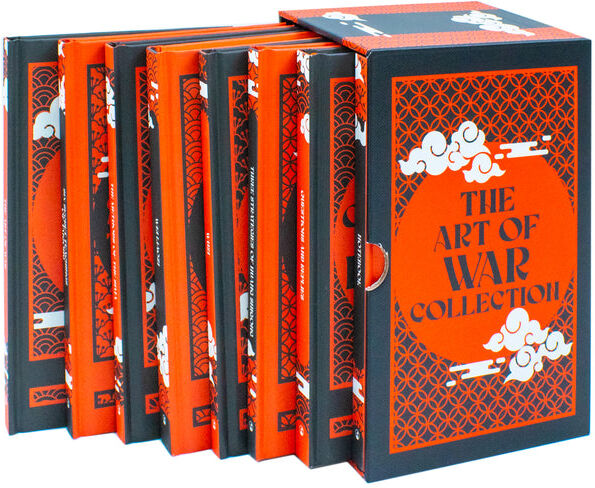
Classic Editions The Complete Art of War 8 Books Collection Box Set – Ancient Military Strategy Classics CollectionThe Complete Art of War 8 Books Collection Box Set of Military Classics From Ancient China: Titles In This Set: The Art of War The Methods of The Sima Wei Liaozi Wuzi Questions and Replies Three Strategies of Huang Shigong Six Secret Teachings of Taigong Note Book Description: Taken from the experiences of Ancient China’s most brilliant warriors more than 2000 years ago, Sun Tzu’s famed The Art of War contains valuable lessons on strategic warfare that continue to be relevant today. Six Secret Teachings concerns itself with the topics of tactics, morality and effective communication, and contains valuable lessons on strategic warfare that continue to be relevant today. One of the oldest of the Seven Military Classics from Ancient China, Wuzi focusses on human nature and behaviour, and contains valuable lessons on strategic warfare that continue to be relevant today. A personal notebook for readers to write their own notes.14,99 £*Shipping: 2,99 £Secure redirect to the provider

-
What was China's role in the Cold War?
During the Cold War, China played a significant role as a major communist power. Initially, China was aligned with the Soviet Union, but the two countries had a falling out in the 1960s, leading to a period of hostility known as the Sino-Soviet split. China then pursued its own path, asserting its independence and promoting its own brand of communism. This shift had a major impact on the dynamics of the Cold War, as it created a new power bloc and forced the United States to recalibrate its global strategy. Overall, China's role in the Cold War was characterized by its efforts to assert itself as a major player on the world stage and to shape the global balance of power. **
-
What was Austria's role in the Cold War?
During the Cold War, Austria played a unique role as a neutral country situated between the Eastern Bloc and the Western powers. Despite being geographically close to the Iron Curtain, Austria managed to maintain its neutrality and avoid being directly involved in the conflict between the United States and the Soviet Union. This allowed Austria to serve as a meeting ground for East-West diplomacy, hosting important summits and negotiations between the two sides. Additionally, Austria benefited from economic and cultural exchanges with both the Eastern and Western blocs, contributing to its post-war reconstruction and development. **
-
Is the Cold War really cold?
The term "Cold War" refers to the political and ideological tension between the United States and the Soviet Union after World War II, characterized by espionage, proxy wars, and a nuclear arms race. While direct military conflict between the two superpowers was avoided, the Cold War was marked by numerous "hot" conflicts in places like Korea, Vietnam, and Afghanistan. Additionally, both sides engaged in covert operations and supported opposing factions in various countries, leading to significant violence and instability. Therefore, while the Cold War may not have resulted in a full-scale direct war between the US and the Soviet Union, it was far from "cold" in terms of its impact on global politics and the lives of people in many parts of the world. **
-
What role did Berlin play during the Cold War?
Berlin was a significant focal point during the Cold War as it was divided into East and West Berlin, representing the divide between the communist Eastern Bloc and the capitalist Western Bloc. The Berlin Wall, constructed in 1961, physically separated the two sides and became a powerful symbol of the ideological conflict between the United States and the Soviet Union. The city also witnessed several key events, such as the Berlin Airlift in 1948-1949 and President John F. Kennedy's famous "Ich bin ein Berliner" speech in 1963, highlighting its importance in Cold War history. **
What role did Gorbachev play in the Cold War?
Mikhail Gorbachev played a significant role in the end of the Cold War. As the leader of the Soviet Union, he implemented a series of reforms known as "perestroika" and "glasnost" to modernize the Soviet economy and political system. These reforms led to greater openness and transparency, which ultimately contributed to the collapse of the Soviet Union and the end of the Cold War. Gorbachev also engaged in diplomatic efforts with the United States, including signing the Intermediate-Range Nuclear Forces Treaty, which helped to reduce tensions and pave the way for the eventual end of the Cold War. **
Why is the Cold War called cold?
The Cold War is called "cold" because it was characterized by a lack of direct military conflict between the two main superpowers involved, the United States and the Soviet Union. Instead of engaging in open warfare, the two sides engaged in a variety of indirect confrontations, such as espionage, propaganda, and proxy wars in other countries. The term "cold" reflects the fact that the tensions and hostilities between the two sides never escalated into a full-scale hot war. **
Top-Angebote
Products related to Cold War:
-
PlayStation Call of Duty: Black Ops Cold War (No DLC) For Ps4, Used - GoodProduct Overview: Call of Duty: Black Ops Cold War (No DLC) for PlayStation 4 brings intense, Cold War-era combat to life with its fast-paced multiplayer, gripping campaign, and zombies mode. Set in the early 1980s, players are thrust into covert operations, facing iconic characters and navigating through espionage, betrayal, and high-stakes missions. Featuring new multiplayer modes, classic maps, and an immersive Zombies experience, this game offers an unforgettable experience for Call of Duty fans. Product Description: Dive into the heart of the Cold War with Call of Duty: Black Ops Cold War for PS4. Featuring intense multiplayer action, a thrilling campaign, and the iconic Zombies mode, this game offers fast-paced combat and classic Black Ops gameplay without the DLC. Key Features: Cold War Campaign: Engage in covert operations in iconic global locations, including Berlin, Vietnam, and the KGB. Multiplayer Action: New modes, weapons, and tactical gameplay for dynamic online matches. Iconic Zombies Mode: Survive against waves of undead in classic and new Zombies maps with challenging objectives. New Weapons and Customisation: Choose from a wide array of Cold War weapons and customise your loadouts for maximum effectiveness. Cross-Platform Play: Enjoy seamless multiplayer matches with cross-generation support between PS4 and PS5 players. Intense Firefights and Tactical Teamwork: Team up with friends in multiplayer and Zombies modes for co-op action. Authentic Cold War Atmosphere: Immerse yourself in the 1980s with period-accurate settings, weapons, and gear. Step into the Cold War era with Call of Duty: Black Ops Cold War (No DLC) for PS4, featuring fast-paced multiplayer, a gripping single-player campaign, and an iconic Zombies mode. Dive into covert espionage missions, fight in global hotspots, and face off against the undead in a challenging Zombies experience. With new weapons, classic Black Ops gameplay, and cross-platform multiplayer, Black Ops Cold War offers endless action and intense combat. This edition excludes the DLC but still delivers a complete and immersive Call of Duty experience. Call of Duty Black Ops Cold War PS4 Cold War Call of Duty game PS4 multiplayer shooter Black Ops Cold War Zombies mode Call of Duty campaign PS4 Cold War multiplayer modes PS4 PS4 action-packed combat game Black Ops Cold War without DLC Call of Duty PS4 co-op Zombies survival mode PS48,00 £*Shipping: 0,00 £Secure redirect to the provider
-
Classic Editions The Complete Art of War – 8 Book Hardback Box Set Sun Tzu & Ancient Chinese Military Strategy Classics Leadership, Warfare & Strategy CollectionExplore centuries of strategic thinking with The Complete Art of War – 8 Books Collection Hardback Box Set, an impressive collection of classical Chinese writings on warfare, leadership, tactics and strategy. Bringing together influential works from ancient Chinese military thought, this hardback collection includes titles such as The Art of War, Methods of the Sima, Wuzi, Wei Liaozi, Three Strategies of Huang Shigong, and Six Secret Teachings of Taigong, alongside additional works included in the eight-volume set. These enduring texts examine subjects including leadership, planning, discipline, intelligence, diplomacy, battlefield tactics and strategic decision-making. Although written in the context of ancient warfare, many of their principles have subsequently attracted readers interested in history, leadership and strategic thinking. Presented as an 8-volume hardback boxed collection, the set is ideal for readers of military history, students of classical philosophy and collectors of beautifully presented classic works. Why Readers Will Love This Collection Includes 8 hardback volumes in a collectible box set Features influential works of ancient Chinese military strategy Explores strategy, leadership, tactics and decision-making Excellent addition to military history and philosophy collections Attractive hardback format for a home or study library Ideal gift for history, strategy and classic literature enthusiasts The Complete Art of War 8 Book Collection brings together some of history's most enduring works on strategy in one impressive hardback set. Titles In This Set: Notebook Questions and Replies Three Strategies of Huang Shigong Wuzi Wei Liaozi The Methods of The Sima Six Secret Teachings of Taigong The Art of War16,99 £*Shipping: 2,99 £Secure redirect to the provider
-
Classic Editions The Complete Art of War 8 Books Collection Box Set – Ancient Military Strategy Classics CollectionThe Complete Art of War 8 Books Collection Box Set of Military Classics From Ancient China: Titles In This Set: The Art of War The Methods of The Sima Wei Liaozi Wuzi Questions and Replies Three Strategies of Huang Shigong Six Secret Teachings of Taigong Note Book Description: Taken from the experiences of Ancient China’s most brilliant warriors more than 2000 years ago, Sun Tzu’s famed The Art of War contains valuable lessons on strategic warfare that continue to be relevant today. Six Secret Teachings concerns itself with the topics of tactics, morality and effective communication, and contains valuable lessons on strategic warfare that continue to be relevant today. One of the oldest of the Seven Military Classics from Ancient China, Wuzi focusses on human nature and behaviour, and contains valuable lessons on strategic warfare that continue to be relevant today. A personal notebook for readers to write their own notes.14,99 £*Shipping: 2,99 £Secure redirect to the provider
-
Why is the Cold War called the Cold War?
The Cold War is called the Cold War because it was characterized by a lack of direct military conflict between the two main adversaries, the United States and the Soviet Union. Instead of engaging in open warfare, the two superpowers engaged in a variety of indirect conflicts, such as the arms race, espionage, and proxy wars. The term "cold" reflects the fact that the tensions and hostilities between the two sides did not escalate into full-scale military confrontation. **
-
What was Berlin's role in the Cold War?
Berlin played a significant role in the Cold War as it was a divided city, with East Berlin controlled by the Soviet Union and West Berlin controlled by the Western Allies. The Berlin Wall, built in 1961, became a symbol of the division between East and West, separating families and restricting movement between the two sides. The city was a hotspot for espionage and intelligence operations, with both sides using Berlin as a battleground for ideological and political influence. The fall of the Berlin Wall in 1989 marked the beginning of the end of the Cold War and the eventual reunification of Germany. **
-
What was China's role in the Cold War?
During the Cold War, China played a significant role as a major communist power. Initially, China was aligned with the Soviet Union, but the two countries had a falling out in the 1960s, leading to a period of hostility known as the Sino-Soviet split. China then pursued its own path, asserting its independence and promoting its own brand of communism. This shift had a major impact on the dynamics of the Cold War, as it created a new power bloc and forced the United States to recalibrate its global strategy. Overall, China's role in the Cold War was characterized by its efforts to assert itself as a major player on the world stage and to shape the global balance of power. **
-
What was Austria's role in the Cold War?
During the Cold War, Austria played a unique role as a neutral country situated between the Eastern Bloc and the Western powers. Despite being geographically close to the Iron Curtain, Austria managed to maintain its neutrality and avoid being directly involved in the conflict between the United States and the Soviet Union. This allowed Austria to serve as a meeting ground for East-West diplomacy, hosting important summits and negotiations between the two sides. Additionally, Austria benefited from economic and cultural exchanges with both the Eastern and Western blocs, contributing to its post-war reconstruction and development. **
Similar search terms for Cold War
-
Is the Cold War really cold?
The term "Cold War" refers to the political and ideological tension between the United States and the Soviet Union after World War II, characterized by espionage, proxy wars, and a nuclear arms race. While direct military conflict between the two superpowers was avoided, the Cold War was marked by numerous "hot" conflicts in places like Korea, Vietnam, and Afghanistan. Additionally, both sides engaged in covert operations and supported opposing factions in various countries, leading to significant violence and instability. Therefore, while the Cold War may not have resulted in a full-scale direct war between the US and the Soviet Union, it was far from "cold" in terms of its impact on global politics and the lives of people in many parts of the world. **
-
What role did Berlin play during the Cold War?
Berlin was a significant focal point during the Cold War as it was divided into East and West Berlin, representing the divide between the communist Eastern Bloc and the capitalist Western Bloc. The Berlin Wall, constructed in 1961, physically separated the two sides and became a powerful symbol of the ideological conflict between the United States and the Soviet Union. The city also witnessed several key events, such as the Berlin Airlift in 1948-1949 and President John F. Kennedy's famous "Ich bin ein Berliner" speech in 1963, highlighting its importance in Cold War history. **
-
What role did Gorbachev play in the Cold War?
Mikhail Gorbachev played a significant role in the end of the Cold War. As the leader of the Soviet Union, he implemented a series of reforms known as "perestroika" and "glasnost" to modernize the Soviet economy and political system. These reforms led to greater openness and transparency, which ultimately contributed to the collapse of the Soviet Union and the end of the Cold War. Gorbachev also engaged in diplomatic efforts with the United States, including signing the Intermediate-Range Nuclear Forces Treaty, which helped to reduce tensions and pave the way for the eventual end of the Cold War. **
-
Why is the Cold War called cold?
The Cold War is called "cold" because it was characterized by a lack of direct military conflict between the two main superpowers involved, the United States and the Soviet Union. Instead of engaging in open warfare, the two sides engaged in a variety of indirect confrontations, such as espionage, propaganda, and proxy wars in other countries. The term "cold" reflects the fact that the tensions and hostilities between the two sides never escalated into a full-scale hot war. **
* All prices are inclusive of VAT and, if applicable, plus shipping costs. The offer information is based on the details provided by the respective shop and is updated through automated processes. Real-time updates do not occur, so deviations can occur in individual cases. ** Note: Parts of this content were created by AI.